
Life in Kusatsu
Documenting my life working at Kusatsu Onsen Ski Resort, the feelings of the past month and a half, and the process of slowly getting better.
Contents
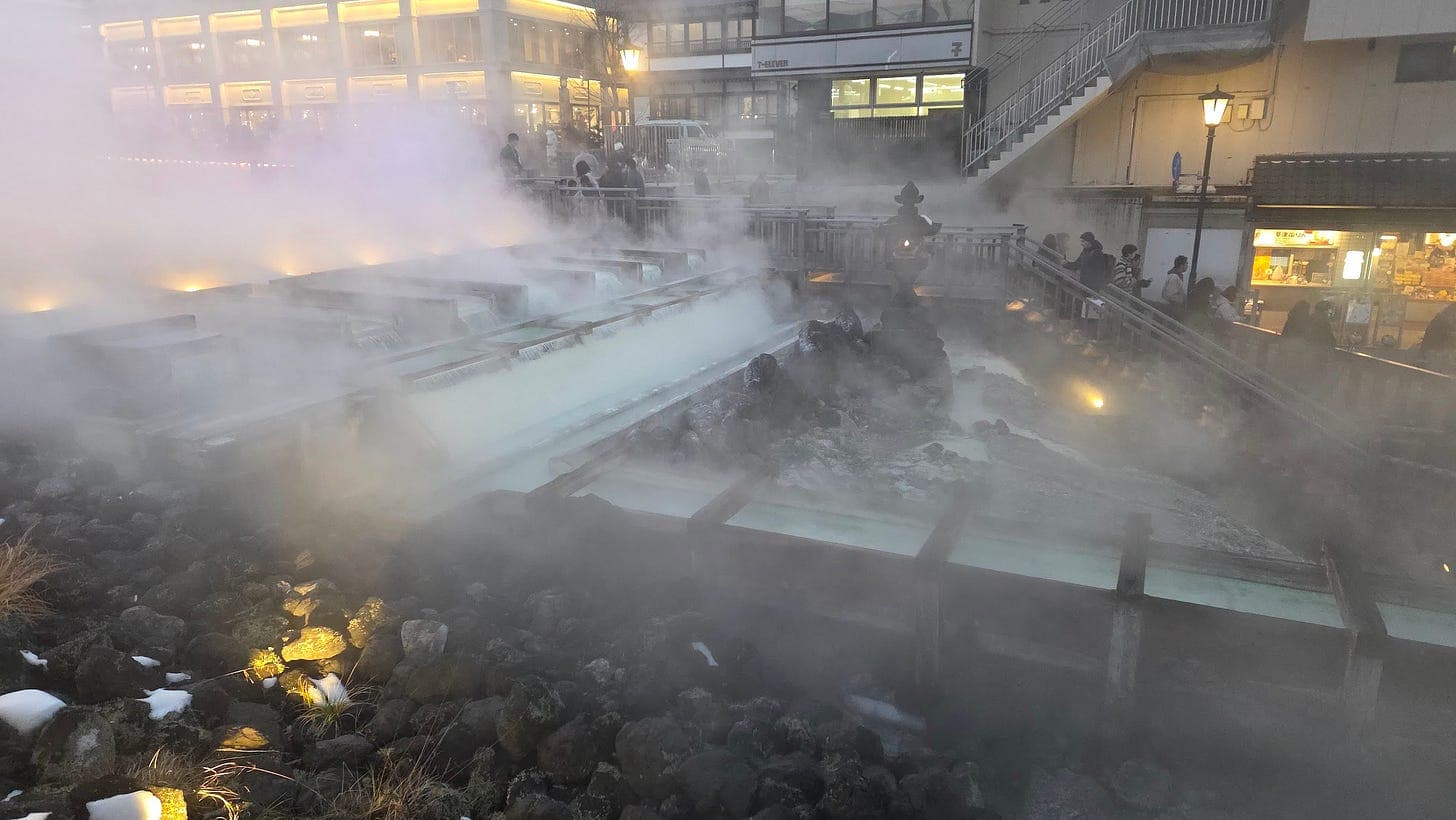
Kusatsu was my first stop in Japan, and it's also where I've been living for over a month now.
Kusatsu has been voted the number one hot spring in Japan for 23 consecutive years in the Top 100 Onsen rankings. Generally, people visit the three major hot springs: Goza-no-Yu, Sai-no-Kawara Open-Air Bath, and Otaki-no-Yu. Personally, I recommend Otaki-no-Yu the most. However, to be honest, after soaking here for over a month, I haven't particularly felt the "greatness" of the hot springs here. I know it's very natural, but it seems that's about it.
My impression of Kusatsu is that it's a place developed mainly for "hot spring tourism". The living amenities are not very good. There are only two supermarkets in the entire town, one of which is newly opened. The variety of vegetables and meat sold there is in the single digits, and the seasonings my friends recommended are not sold here.
There are three Lawson and three 7-11 stores, but no FamilyMart or other convenience stores. The nearest Lawson requires walking down the mountain to reach, and I don't dare go there at night because the wind is strong and there are no streetlights.
I used to come to Japan often to buy shoes, so I only brought a pair of snow boots and running shoes, thinking I could buy another pair here. It turned out there's nowhere to buy shoes in Kusatsu at all.
Eating out comes with tourist area prices (expensive), so I have to prepare three meals a day from the limited variety in the supermarkets. I'm already someone who doesn't demand much about food, but the diet here still makes me feel struggling.
I see that the company employees usually eat cup noodles, rice balls, and bread for lunch. It seems only we part-timers put more effort into preparing lunch. I wonder if they eat better for dinner or if they have already given up struggling here.
Traffic is also very inconvenient, with only two options: bus or car. It takes four hours by bus to get to Shinjuku, Tokyo. But I guess transportation to ski resorts is generally this inconvenient. For work commuting, there is a company shuttle bus.
When I was in Australia, I also lived in the countryside, surrounded by nothing but grass. But it was easy for backpackers to buy cars, and easy to hitch a ride to the supermarket. Supermarkets in Australia like Woolies, Coles, Aldi, etc., sold a wide variety of things, making me feel that the countryside in Australia had better living amenities than Kusatsu.
Zip Line Operator
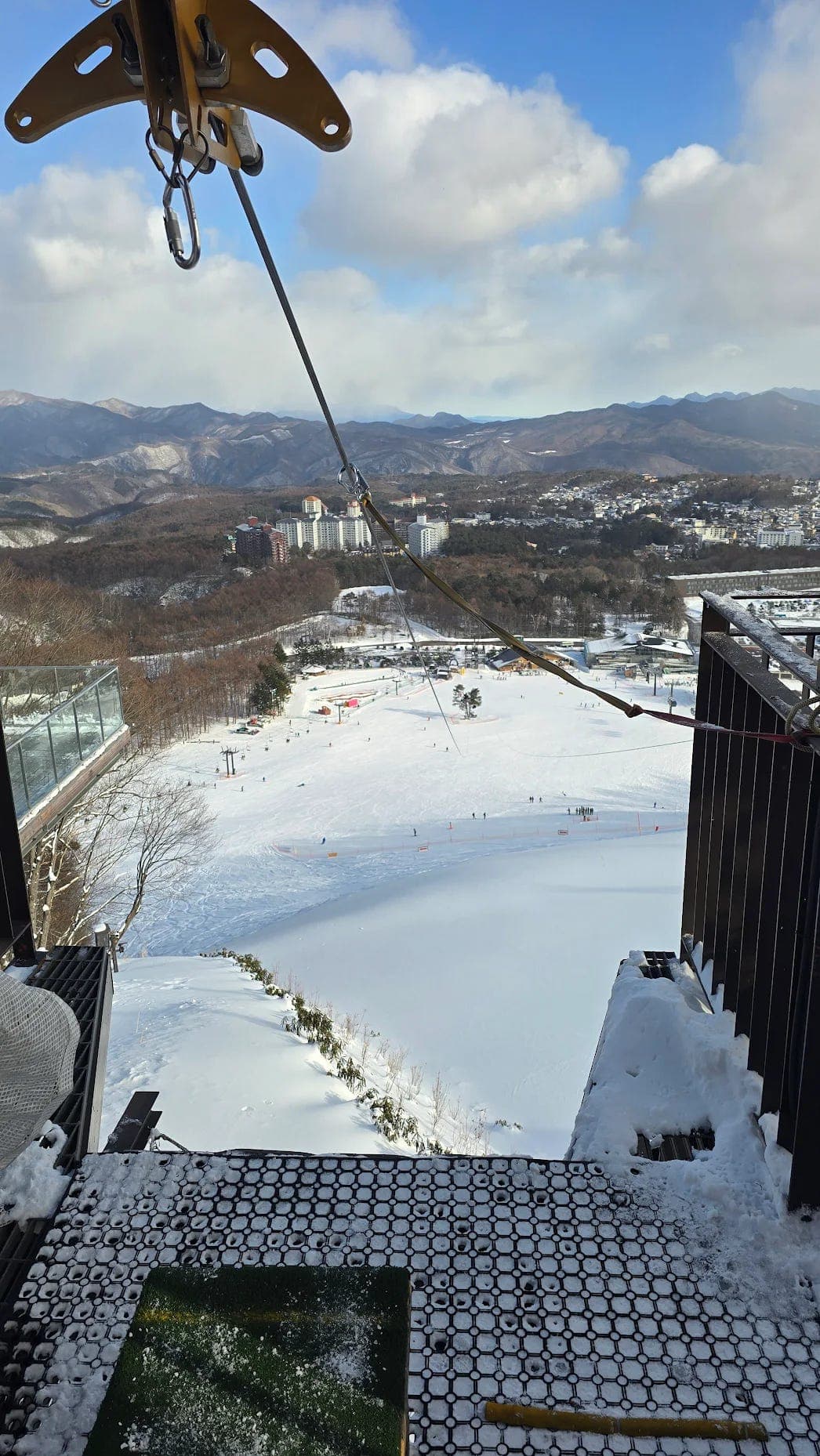
I found this job through an agency while I was in Australia. Since I didn't have much time then, seeing the first ski resort vacancy pop up with seemingly good benefits—including a single room, free lift pass, and equipment rental—I took it.
During the interview, I was told I would be looking after the ski lifts, but after arriving, I found out I was responsible for a high-altitude zip line facility called Banzip Tengu. I really didn't expect a ski resort to have this kind of job. Previously, I found jobs to be mostly lifts, restaurants, front desk, rental gear, or housekeeping in partner hotels.
The job itself is not difficult. It's divided into reception, start point, and end point. First, sign the consent form at the reception, help guests put on the zip line vest, and then let them take the lift up to the start point. People at the start point are responsible for hooking the vest onto the zip line pulley, then pressing a button to let the guest slide down. People at the end point operate a hoist to unload the guest who has slid down from the zip line.
The reception is shared with the lift ticket counter, so ticket staff also help with guests. People at the start point don't come down after taking the lift up. When there are no guests, they rest up there and can use computers, read books, or do their own things. People at the end point are more tired; after sending guests up from the reception, they go to the end point to pick up guests, and go back to the reception when there are no guests.
Originally, I had a chance to go up to the start point, but it was occupied by a Japanese senior. After we went up together for two days, he reported to the supervisor that I was not qualified. Since then, I could only stay at the end point. I will mention him again later.
But It's Not the Work That's Tiring
Although the zip line job is physical labor—walking back and forth, moving zip line pulleys—the work itself is usually not the most tiring part. What makes me most exhausted here are the annoying senior, the frustration with Japanese, and the torture of boredom.
The Annoying Senior
A Japanese senior in the same zip line department puts a lot of pressure on me and makes me feel repulsed. The interaction was good at first, but slowly friction started to appear. He is good at questioning me on how to do things even though I hadn't learned them at all. Whenever I made a mistake, he would focus heavily on that error. He also likes to make inappropriate dirty jokes. I found it hard to tolerate working with him, so I even booked an online session with my previous counselor to discuss his negative impact on me.
At first, I was annoyed that I had to seek counseling because of him, but the counselor told me, "I'm not counseling because of him; he is just the person who made me take this step to deal with this issue." It made me think of my previous workplaces, or even when I was working at a vegetable factory in Australia, where I would also be affected by some colleagues and get stuck in my dislike for them.
Changing countries and jobs, I think I finally need to practice how to deal with incompatible colleagues in the workplace and reduce their impact on me.
The Frustration with Japanese
I have JLPT N2 and take conversation lessons with a Japanese teacher in Tokyo on an online platform regularly. I also made a group of Japanese friends when I was in Australia and spoke Japanese with them occasionally.
But working at the ski resort so far, I still feel painful about my Japanese. I was told by the aforementioned senior and another supervisor that my Japanese was not good enough. Guests directly asked to "get someone who can speak Japanese". I also misheard instructions a few times when working with colleagues. There are a lot of ski resort-related Japanese terms that I often don't understand and memorize slowly.
So I studied Japanese harder than ever, but I only got more anxious.
From December to early January, in the process of getting more and more anxious, I suddenly figured it out. My pain comes not only from my Japanese not being good enough but from me thinking I was good enough. The magnitude of this "gap between reality and self-expectation" determines how much pain I feel.
Realizing my current Japanese level and finding that I need to spend much more time than expected to improve it, I really didn't want to face it.
Slowly accepting that I have a longer road to tread, the reality that my Japanese is not good enough needs time to change, but the state of internal mental exhaustion can be changed immediately. I hope I can move forward without being crushed by anxiety.
The Torture of Boredom
Another troubling aspect of this job is that it's too idle when there are no guests.
The zip line is actually most popular in summer, with up to nearly 400 people a day. But in winter, with strong winds and heavy snow, almost no one wants to play the zip line. Sometimes only 4 or 5 guests come in a day. The rest of the time without guests involves standing at the counter without being able to use phones. Although we can chat with colleagues, when it's idle every day, topics run out. Trying to write something on a notepad attracts onlookers from other bored colleagues, and eventually, I got too lazy to explain and stopped writing.
In Australia, although the work was also boring, at least my body was moving, and I could immerse myself in simple labor. But here, when there are no guests, I can only space out.
It reminds me of the "Solitude and Electric Shock Experiment". This experiment found that people would rather be shocked than be bored. The experiment let subjects choose to stay in a room with only an electric shock button. Subjects could freely choose to just sit and think or be shocked. More than half of the people went to click that button.
I would rather have that button to click when I'm at work.
Getting Better Slowly
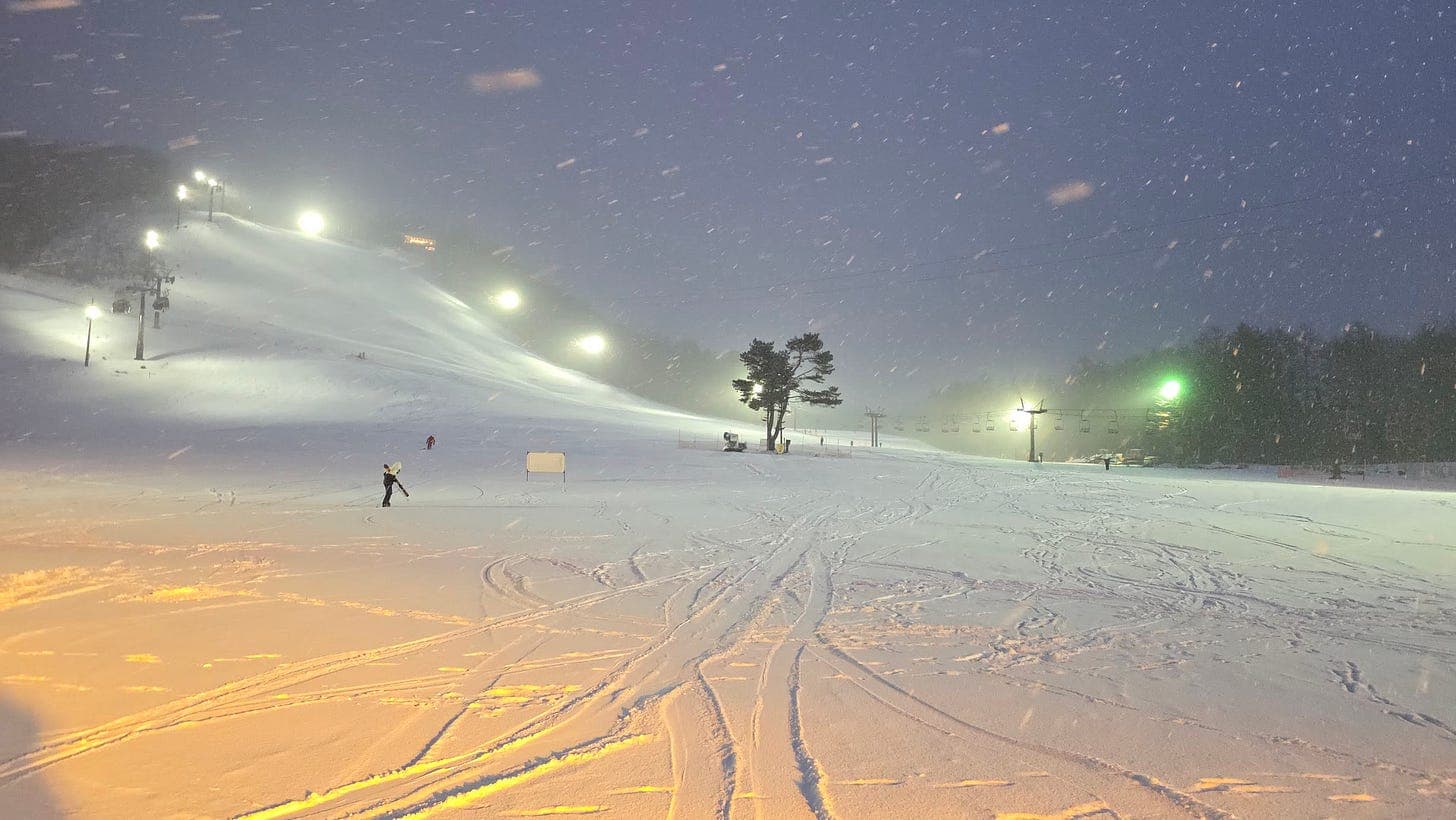
I've been here for over a month, and I'm slowly getting used to it and finding ways to crack the problems I encountered.
Facing the annoying colleague, the approach discussed with the counselor is to "keep a distance from him and spend energy on other friendly colleagues". After all, except for this senior, everyone else is nice to me. For example, when my phone strap broke, a Japanese colleague gave me his spare one the next day. Two Japanese people from Hokkaido enthusiastically taught me skiing; even though they didn't have many holidays either, they spent the whole day practicing with me and others. The Japanese guy living with me is good at cooking and often shares his dishes with me, and often gives me rides to catch the last bus after work. Other Taiwanese working here help each other in work and life, organizing hot pot parties and preparing everything so I just have to go and eat. Several Chinese colleagues working with me also hate that senior and we often complain to each other to vent.
It's difficult to fight negative energy with positive energy, but it shouldn't be impossible. In the past, even one negative comment on my articles would prevent me from accepting ten other positive ones with peace of mind. However, writing more and more now, I can accept and affirm my own words better, and better judge which comments are helpful for me to continue writing. Dealing with annoying colleagues, I think I will get better at it too.
Facing the torture of boredom, when there are no guests, I will stand at the entrance with the ski resort guide map to welcome guests. Although it's not within my scope of duties and I won't get paid more, I found unexpectedly many benefits.
Standing outside, I'm the first to meet guests. When guests have questions about the ski resort layout, they ask me first, giving me a chance to practice Japanese. If I encounter something I really don't know, I guide them to the ticket counter and then learn those Japanese phrases. Also, thinking about things won't be interrupted by other colleagues, and I can even secretly use voice input on my phone to record some thoughts.
However, this trick usually only works for half a day because the ski resort closes at 4:30 PM. Guests buying tickets decrease after noon, so usually, there is no need to stand at the door after lunch.
Using this trick, I really feel like an NPC. I don't react when guests walk from afar, but as soon as they get close to me, I strike up a conversation or answer questions, much like an NPC being triggered.
Life is slowly finding a rhythm too. At first, I couldn't do anything after work and couldn't help but watch anime until sleep (I watched My Hero Academia from the first season to the final season). But slowly I can read a bit, write a bit. Now after work, I can quickly go to the hot spring, eat, and return to my room to do things.
The current routine is working at the ski resort during the day, hot springs, cooking, and anime at night. If I have energy, I do open source, write, edit videos, and look for full-time jobs. On holidays, I go skiing or run to Tokyo for concerts and exhibitions.
Going to the hot spring every day is partly due to the environment. The dormitory is an old wooden house, and the bathroom faces the entrance directly. Freezing wind keeps pouring in, making me shiver while showering, so I just go to the hot spring for my daily wash.
Living in Kusatsu, I unconsciously compare it with Australia. If not for the incentive of "skiing", I think I probably wouldn't want to come here at all. But after a short two-day trip to Tokyo during a holiday, I deeply felt that the Japan I want to stay in is Tokyo. I won't reveal the specific reasons here for now!
After the ski resort season ends in late March, I will head to Tokyo, hoping to find a full-time job there and switch my working holiday visa to a work visa.
I will definitely miss these simple days of hot springs and skiing in the future.
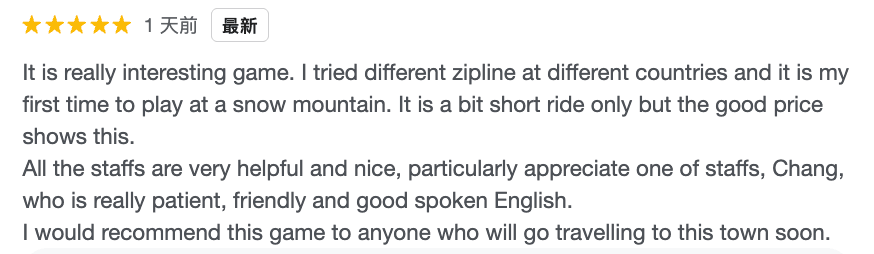
Finally, sharing a little story. Just yesterday I received a Google review, which reminded me that it's a great thing to let people get good memories when traveling and relaxing.
At the end point of the zip line, constantly welcoming guests sliding down from the mountaintop with full smiles (occasionally crying kids too) is actually quite healing. It's completely different from when I was a software engineer—not facing powerless Errors, not facing supervisors constantly dropping meteorites, and not facing complaints about the product from colleagues in other departments. Although there is a high probability of returning to that life later, I am glad I stepped out.
support
Give me a Boba!
Thank you for arriving at my web 🕸️ in a time when attention is precious. If this visit felt worthwhile, buying me a boba would mean a lot!