
- Published
Re-understanding Habits — "Atomic Habits" Book Digest (Part 1)
目錄
Note: This post is translated by AI. If you find any unnatural phrasing or errors, please feel free to contact me via email or other channels. Your feedback is appreciated!
Preface
This book teaches not psychological techniques of "self-motivation" or "strengthening willpower", but how to still achieve your goals when willpower is insufficient.
In the modern age where smartphones reign supreme, people find it increasingly difficult to resist temptations on their own. After all, these temptations (such as TV series, mobile games, etc.) are readily available, and there are countless people behind them meticulously designing to make us fall. Speaking for myself, I love reading manga and watching anime very much. Often chase a whole season at once, sacrificing sleep time or whole weekend. Original planned things were not finished, can only hate myself more and more day after day.
Not relying on willpower, what to rely on?
Since mentioned above that modern temptations are hard to resist, modern people should think not about "willpower", "self-motivation" etc. means to attempt to fight against the entire environment on their own, but correctly cognize how society, environment we live in, and everything around allow us to make decisions, how habits themselves are established, and dominate our lives. Before being designed by others, let's use this system of atomic habits to design ourselves first.
Through this book, will be able to answer:
- How habits affect our lives
- How good habits are formed, how bad habits are eliminated
- How to make good use of power of "technology" to help yourself
How Habits Affect Our Lives
We tend to overestimate importance of a decisive moment, and underestimate huge value some small changes can produce.
Take losing weight as an example. I often see bloated self in photos or mirror, then ambitiously set exercise and diet plans, determined to sculpt my perfect figure this time. This kind of impassioned, determined moment is the decisive moment.
But result is often just persisted for a few weeks, and ended up with nothing before results came out.
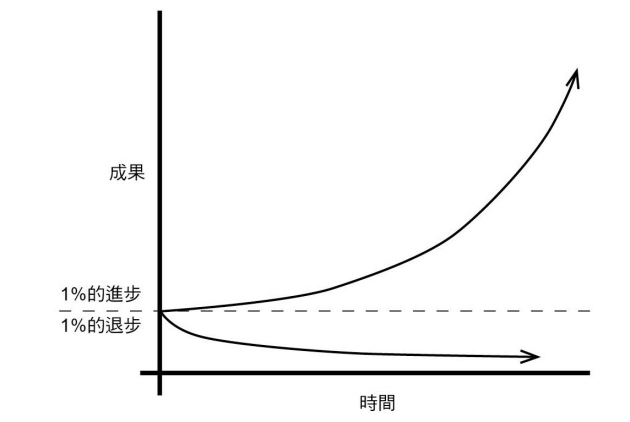
Actually if really want to produce effect, we should start from a little change every day more, for example: drink one less cup of beverage every day.
The book uses "compound interest thinking" here to explain why daily small changes can create huge changes: as long as maintain 1% progress every day, stable and continuous, results will soar like the line above; conversely, if maintain 1% regression every day, then eventually will infinitely approach 0.
But why are we like this? Are we really that suck?
Actually just results didn't come fast enough, so slowly gave up
Example of melting ice in the book
- We often expect ice cube to melt as soon as heated
- But actually ice cube only starts to melt when heated from 26 degrees all the way to 32 degrees
- Compare to effort, this distance to reach appearance of results is "Valley of Disappointment" (see figure below)
- All efforts are meaningful, just happen at 32 degrees
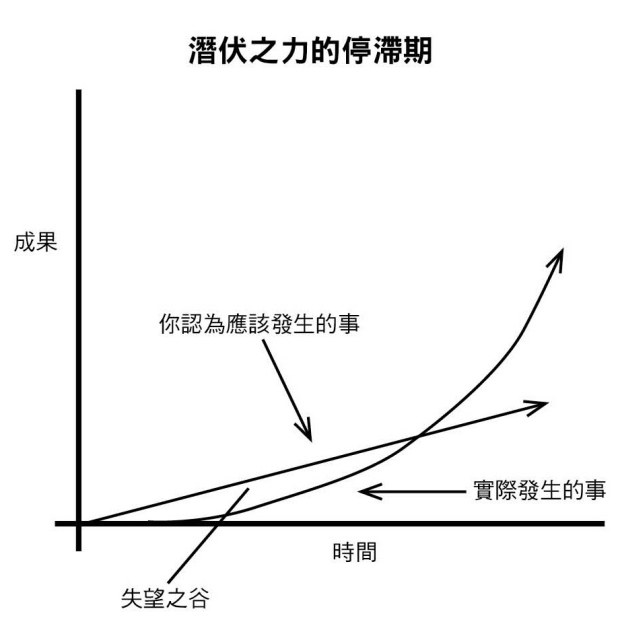
- Continue example of drinking beverage: drink one less cup of beverage every day, won't become thin immediately; study English for one hour today, won't master English immediately
- Even if we know importance of "accumulation" well, but process of accumulation we need "strong willpower"
- Fact is, there are too many things in daily life consuming our willpower. We definitely don't lack willpower, but human willpower is originally limited. When studying, working and handling things in daily life, already used up too much willpower, of course it becomes harder to carry out other good habits.
(About how to cross "Valley of Disappointment", will be mentioned again in habit loop later, here just need to know this concept first.)
Problems of Goal-oriented
Problem 1: Winners and losers have same goals
- Goal-oriented is seriously affected by "survivorship bias". Because successful people have set goals, we think setting goals is important. But actually people who failed often also set same goals.
- If winners and losers have same goals, then difference between the two doesn't lie in "goals".
Problem 2: Goals can only bring short-term changes
- Setting goals let us only constantly pursue same results. If system behind is not changed, this is treating symptoms but not root cause.
- Take organizing room as example, usually only when on a whim, will organize room well. But mess up again after maintaining for a few days.
Problem 3: Goals and long-term progress contradict each other
-- When all your efforts focus on a specific goal, what can push you forward after achieving goal?
- Take myself as example, I studied English in third year of high school to strive for good English grade in college entrance exam. Therefore could read English articles crazily every day. Thought I could maintain good habit of reading English after exam at that time. Result was I didn't actively touch English until University graduation.
- Purpose of setting goals is to win game. Purpose of building system is to continue staying in game.
Problem 4: Goals limit your happiness
- Behind any goal implies such assumption: "Once achieve goal, I will be happy."
- Problem of goal-first mindset lies in you will keep delaying happiness until after next milestone.
- Happiness has always been something exclusively for future me to enjoy.
Goals created a conflict of "Either A or B"
- If not achieve goal and succeed, then fail and disappointing.
- You frame yourself in narrow happiness in heart. This is biased.
- Real life journey is unlikely to be exactly same as expectation at start.
Therefore, setting goals is not enough, system is the truth
Goals are results you want to achieve. Systems are processes letting you achieve those results.
System Lets You Enjoy Process
When you fall in love with process, not product, don't have to wait until getting own permission to be happy.
- As long as system is operating, you can feel satisfied anytime.
- Moreover, system can succeed in many forms, not limited to the one you envisioned at beginning.
True long-term thinking is thinking disregarding goals
- Point lies not in any single achievement, but in cycle of continuous refining and improvement.
- Essential condition for progress is investment in process.
Changing Habits Starts from Changing "Identity"
Shift focus from "What I want to achieve" to "What kind of person I hope to become".
Take two answers of people quitting smoking facing smoking as example
- "No thanks, I am quitting smoking"
- "No thanks, I don't smoke"
- Former's identity is "I am a person who smokes, just I am quitting smoking now". Still recognize that smoking self in heart, therefore hard to quit.
- While latter is changing identity from root. He no longer feels he is a person who smokes. Quitting smoking thus happens naturally.
Why Changing Habits is Hard to Achieve 👇
- Wrong things changed
- Wrong ways changed
These two points can be explained through figure below:
- If we want to achieve habits starting from setting goals, just like starting from outermost layer of circle and hoping to affect innermost layer.
- While if we change from identity (what kind of person we are essentially), then result is just piece of cake.
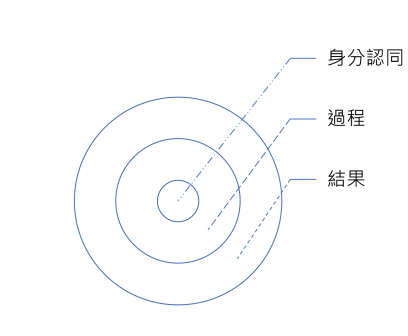
- Outcomes: Goals
- Process: Habits and Systems
- Identity: Beliefs, Worldview, Self-image
Two Steps to Change Identity
- Decide what kind of person you want to become
- Prove to yourself through small wins in life
- Every experience in life will modify your self-image. But unlikely to consider self as football player just by kicking ball once. Also unlikely to consider self as artist just by drawing a picture casually.
- However, when you repeatedly execute these actions, evidence accumulates gradually, your self-image also starts to transform.
- Take participating in reading club as example. Meet every week to listen to everyone talking about books. Self also slowly reading. Will gradually consider self as a person who loves reading and knowledge.
Focus should always be placed on becoming a certain kind of person, not getting a certain kind of result.
Every habit is like a suggestion: "Hey, maybe I am this kind of person."
Seriously Talk About "Habit"
So-called habit, is behavior repeated enough times to be automated.
- Whenever you encounter a new situation in life, brain must make a decision: How should I respond?
- Brain's feedback loop: Try, fail, learn.
- And when we continuously repeat executing this step, we will form automated response way facing same type of problems, that is "habit".
Habits Can Make You Free Up Time Needed for Free Thinking and Creativity
- When habits are created, degree of activity in brain decreases accordingly.
- You will learn to focus on cues that can bring success, block other noises out.
- Encountering similar situations in future, you know exactly what should seek. Don't need to analyze situation from every angle every time. Can release space to multitask.
- Take riding scooter as example. At beginning we might need body balance, road conditions and grasping tightness of throttle. Changing lane we all have to observe for a long time. But after riding for a long time we already accustomed to riding. Also can better respond to sudden situations on road. Or pay attention to surrounding street view while riding.
On above basis, can define "habit" more precisely:
So-called habit, is a set of automated solutions for regular problems and stress.
Habits Won't Limit Freedom, Habits will Create Freedom
Seeing here, my initial doubt was: Is such me still myself? Will I become just an efficiency robot?
- Answer is no. You will only be more at ease and relaxed when letting yourself go to do things really want to do.
❌ Before: While reading manga, I would think "When will I start exercising?"
⭕️ Now: Automate exercise into a habit executed regularly. When I am reading manga or doing other things, don't need to consider problem of exercise anymore. Can be in the moment more at ease.
Ultimate goal of habits: Solve problems in life with "least energy and effort".
Summary with Definition of "Atomic Habits":
Atom is smallest unit composing molecule. And atomic habit is smallest unit composing self. — James Clear (Author)
Roughly introduce here for this article first. Let everyone have basic understanding of habits author hopes us to cultivate. Also avoid article being too long and hard to read. As for how habits operate, how to cultivate, will explain to everyone again in next article.
Thoughts
Actually finished reading this book for a while myself. Also organized in HackMD first. Encouraged after sharing with friends. Finally decided to put article on shelf. Thank you guys reading here. If this article helped you, welcome to help me share. This will become my motivation to continue writing. And if there is anywhere explained not clearly or feel can be improved, also welcome to leave message to tell me!