
86 EIGHTY-SIX
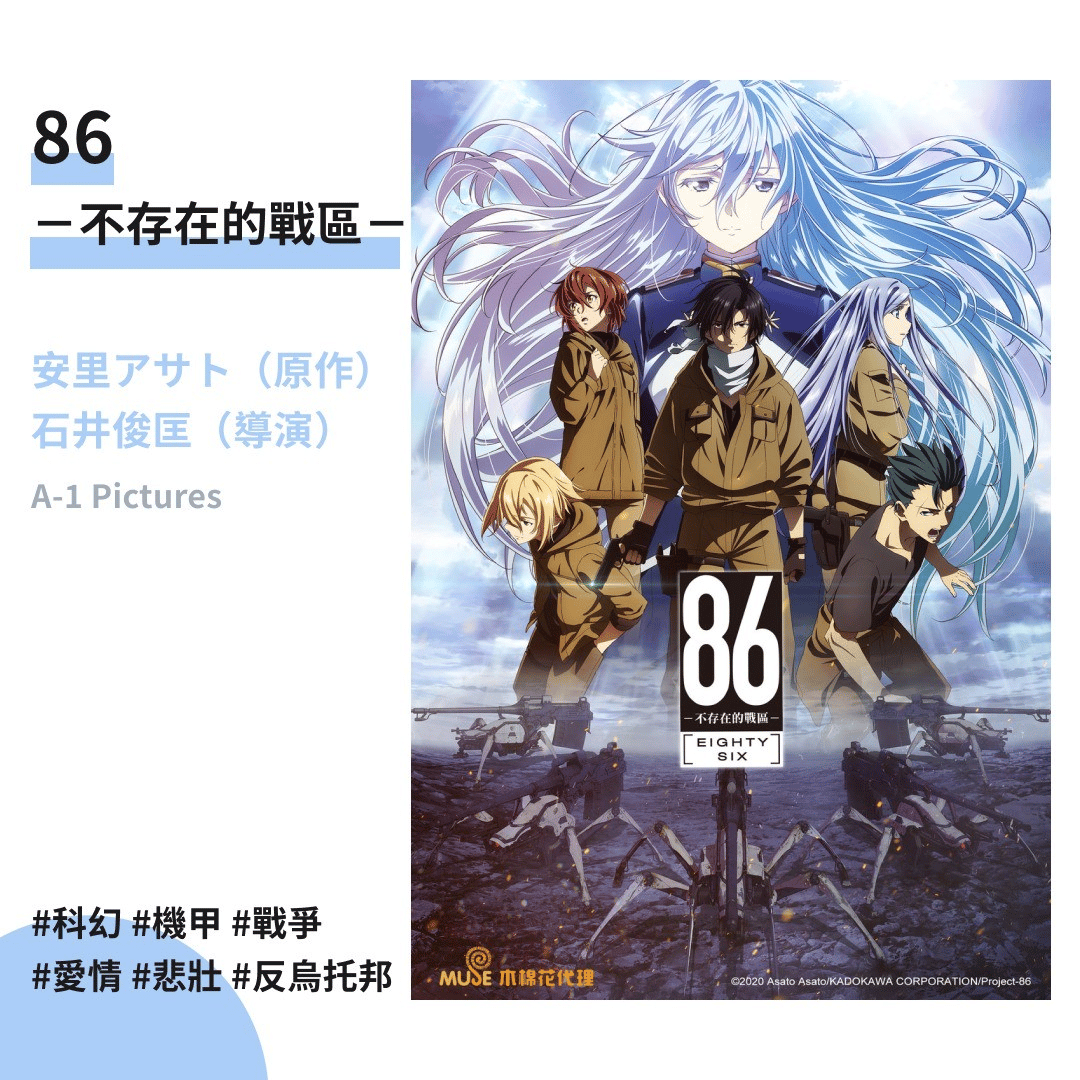
I originally wrote this on IG. I’ve archived it here, keeping it as close to the original as possible.
This show started last October, went on hiatus for three months, and finally wrapped up today! (Just the first two parts. There's more to the story.)
If you want a show that will make you sob, break your heart, and get your blood pumping with some incredibly satisfying battles, don't miss 86 EIGHTY-SIX. Even better if you like mecha.
With Hiroyuki Sawano, who composed for Attack on Titan, on the score, the battle scenes already have a lot going for them. The second the music kicks in, the whole scene comes alive.
The theme song “Kyōkaisen,” which plays a key role in the second part, is performed by amazarashi. This show is a treat for the ears too.
A good story, to me, leaves you sitting quietly after it ends, going back over the details of the adventure and the ways the characters grew and changed, and imagining what might come next for them. You're sad that it's over, but satisfied by how it all came together.
That's the kind of story 86 tells, with an extra measure of depth and tragedy.
The Story
The Republic of San Magnolia recognizes only the silver-haired, silver-eyed Alba as citizens. Everyone of another race is sent to the Eighty-Sixth Sector to fight the neighboring country's unmanned Legion. That's the dystopia the story takes place in.
Shin is a young man who leads a group of teenagers through one deadly fight after another in the Eighty-Sixth Sector. Lena is an Alba Handler who can only direct them through a special communications link from the safety of the rear. The story follows their harrowing battles and partings.
I thought the premise sounded preachy at first. Another dystopia about racial discrimination, I figured.
There turned out to be far more to it. Even with a familiar setup, 86 finds something fresh through its characters, emotional storytelling, and a score that always seems to come in at the right moment. The quieter scenes, the fights, and the dramatic tension are all excellent.
Across the two parts' 23 episodes, I'd say I spent a third crying, a third watching epic battles, and the remaining third enjoying lighthearted scenes that make the other two thirds feel crueler and more tragic.
An episode can give you several peaks in a row. It doesn't just fly by before you know it. The arrangement of the music and the storyboarding are what make those peaks possible.
The Music
86 plays its opening and ending themes wherever they suit the story and its rhythm. Sometimes the ending theme plays halfway through an episode and the story simply resumes afterward.
Music changes the way we experience time and can bring an emotion to the surface almost instantly. Using it so deliberately gives each episode distinct layers. That's one of the advantages animation has over manga and novels.
The Storyboarding
First, similar compositions set different situations against each other, bringing out both what's shared and what's different. The first episode follows a day in Shin's life and a day in Lena's to show the gulf between the Alba and the people of the Eighty-Sixth Sector. Second, director Toshimasa Ishii uses contrast to give transitions more force, as when he cuts from falling food to shellfire.
There's also some beautiful work with light and shadow and some deft symbolism. During a conversation, the camera might cut to insects interacting in close-up to reflect what's happening between the characters.
The detailed mecha, the sound effects, the characters' tragic bonds, and the convictions they bring to those relationships are all highlights too. I'll stop here before I spoil anything. Go watch it for yourself!
support
Give me a Boba!
Thank you for arriving at my web 🕸️ in a time when attention is precious. If this visit felt worthwhile, buying me a boba would mean a lot!