
Thoughts on an Ideal Life
Taipei, Brisbane, Kusatsu, and the fleeting thoughts in between. If I could give a faint smile the moment I step out the door, perhaps that would be my ideal life.
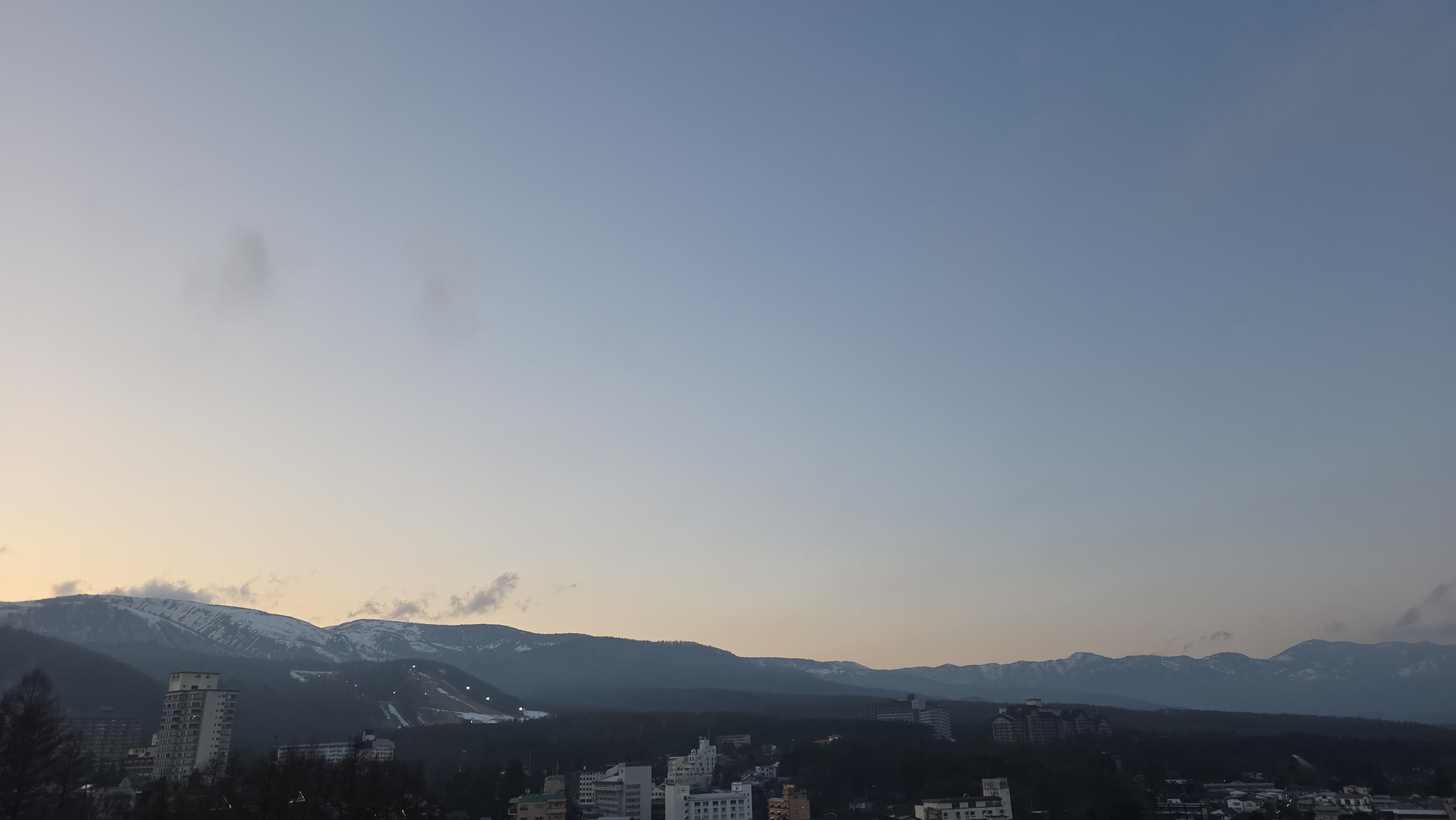
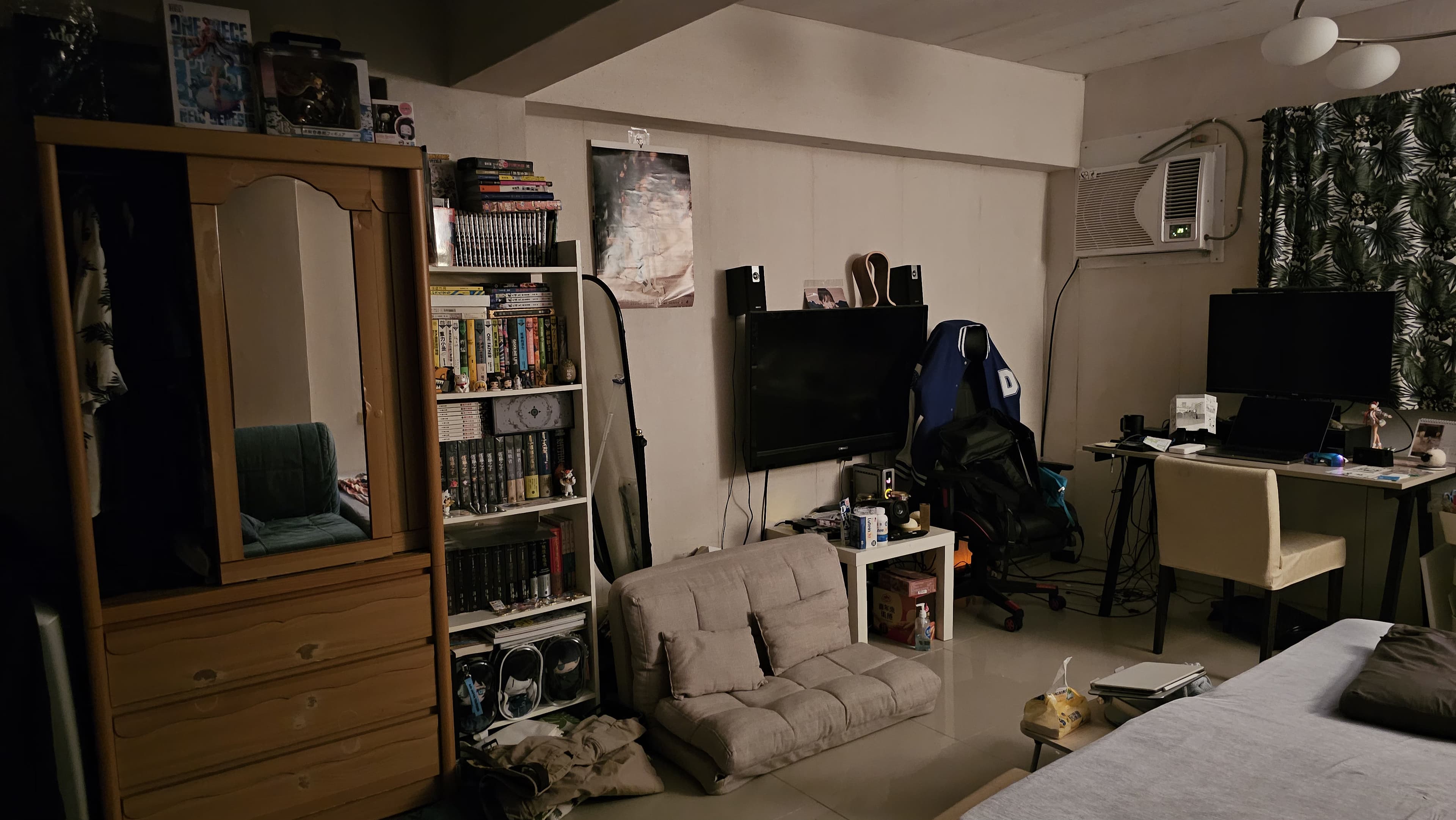
Looking back at this time last year, I was still in Taiwan, living in a single studio apartment on Jilin Road near Xingtian Temple.
That was the most satisfying place I had lived in Taiwan so far. The landlord was nice, the layout was square, there were large windows facing outside, and what satisfied me the most was having an independent doorplate. The only flaws were the lack of a kitchen and the inability to transfer my household registration there.
If I didn't oversleep, I usually woke up at 9 a.m., checked in with my phone first, then looked for a Wemo scooter downstairs. I would let my semi-cohabiting girlfriend know before heading out. Since she worked later than me, she would continue sleeping at my place. However, around this time last year, we were discussing breaking up, so the everyday life with her ended quickly.
I had been riding the route to work for over a year. In Taipei City, I often waited at traffic lights under the blazing sun (or heavy rain), along with a ton of two-stage left turns, so I had to master several routes with the fewest red lights.
My method was to look at the countdown seconds on the pedestrian crossing lights. If there were less than ten seconds left, waiting for a two-stage left turn at this intersection wouldn't take too long. If it just turned green, I could ride forward for two or three more intersections before waiting.
On the rare occasions when I couldn't rent a Wemo or the rain was too heavy, I would take the MRT, which took twice as long to get to the office.
Writing it down now, it feels funny. I don't know why I made myself so exhausted even before work started. Life back then felt like there wasn't a moment to spare, and I had to rush even just to save five minutes.
After dropping my stuff off at the office, I would go downstairs to FamilyMart to buy the 69 NTD discount combo of an iced latte and a meat bun. Eating the meat bun while reading comics in the lobby of the commercial building made my previous rushing to work entirely meaningless. Thus, my morning began in a daze.
Life in the office was plain and unadorned: replying to messages, having meetings, writing code, and writing documentations. I couldn't feel the value in the product I was building, and the sense of achievement was quite low. The team wasn't big, the product wasn't particularly profitable, but the office politics were intense. I was always filled with unforgiveness towards the company, and I remain unforgiving even now.
I was scheduled to get off work at 7 p.m. Usually, I wouldn't leave right on the dot, but before resigning, I left increasingly punctually, and sometimes even early.
After work, I would still write code, read, or do miscellaneous things. Looking back now, it feels like I was just chasing my tail. My efforts back then didn't seem to help me pursue my ideal life; they only made me busier and more lost.
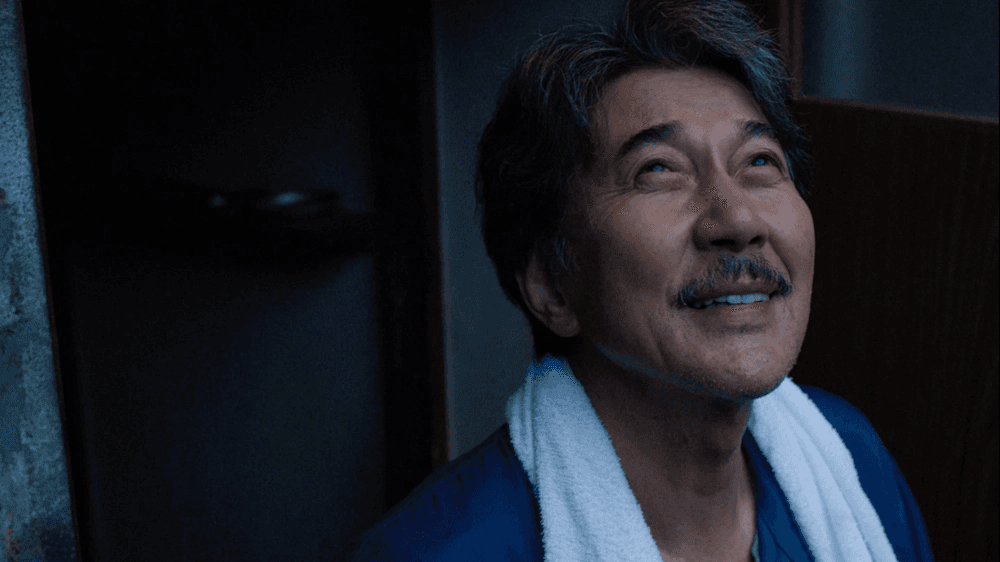
Before bed, I would read novels, mainly works by Kotaro Isaka or Brandon Sanderson. When I started nodding off, I would turn off the lights and sleep. When I saw Mr. Hirayama in the movie Perfect Days do the same, I felt very happy!
This period gave me a sense of rupture. I stayed there, but I always felt I shouldn't be staying there. Sitting in the Taipei office, dreaming of being able to work in Japan, I felt like I was drifting further away from an ideal life every day. I also developed a lot of disgust and dissatisfaction towards myself for being unable to move forward properly. Finally, at a speed I could barely react to, I bought a one-way ticket to Australia.
Fast forward half a year to September. I was in Brisbane, Australia, and had been cutting pumpkins at a factory for a month. Life at this time was much simpler.
I originally lived in a small cabin next to the factory. It was truly a dilapidated century-old house. Fortunately, I was quickly taken in by Taiwanese co-workers from the same factory. One of them, E, was willing to share a room with me. For E, there was no real benefit because his rent didn't change; it just meant the landlord collected an extra rent from me. To this day, I am still amazed and grateful that someone was willing to do this for me when we had known each other for less than a month.
We woke up at 6 a.m. every day and had to be at the factory before 7 a.m. I would make a cup of coffee and eat Aldi's super delicious toast(Chocolate Chip Brioche Sliced Loaf). Before heading out, I made sure I had my gloves, beanie (to secretly wear earphones), water bottle, and gummy bears, and I would drop an effervescent vitamin tablet into my water bottle.
Bringing gummy bears was for my own cravings, and when colleagues were working to the point of despair, I could hand them out to boost their spirits.
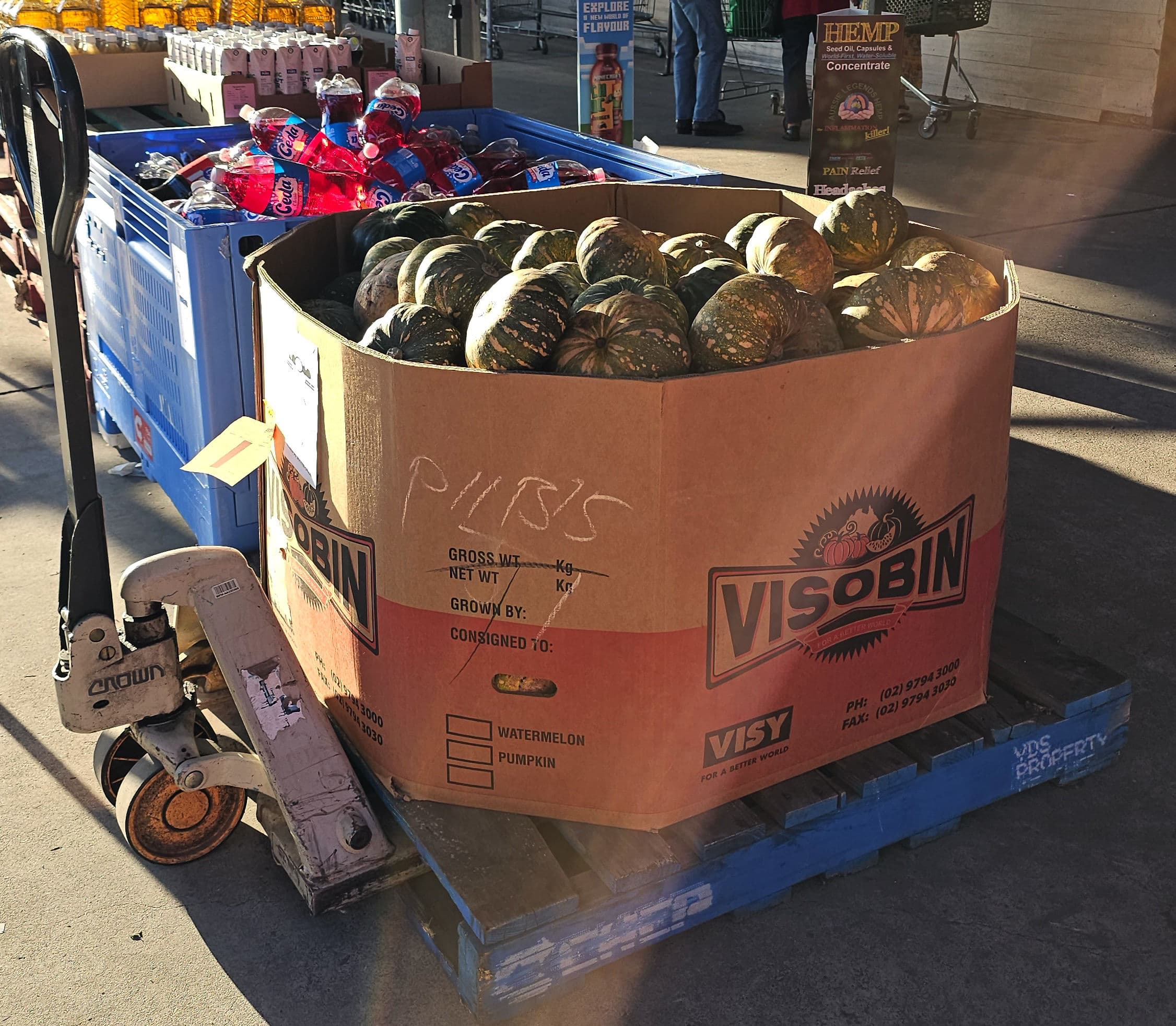
There were five of us in total with two cars, driving 10 minutes to the factory. The work was mainly desperately cutting pumpkins. You can refer to What I Do at the Fruit and Vegetable Factory. Towards the end, I was quite skilled at it. I could order stock from the forklift driver based on the day's orders, and I was also very good at using a Trolly Jack to push a bin of 300-400 kg pumpkins or other vegetables.
After getting home, I'd first take a shower to wash off the smell all over me, then lie on the sofa and vegetate for a bit before cooking dinner and the next day's lunchbox (later, my dinner was quite often cooked by E, who shared my room). They had a big TV in the living room, and we would watch dating reality shows, anime, and YouTube together. After dinner, there usually wasn't much to do, so we had to sleep early.
In Australia, we wouldn't eat out every day; it was expensive and required driving. So, every few days we would go to one of the three large supermarkets: Woolies, Coles, or Aldi. If we needed daily necessities, we'd go to Kmart, which essentially sold everything. When we missed the taste of home, we'd find an Asian supermarket.
When we encountered crappy things at the factory, we would sometimes impulsively drive 40 minutes after work to buy McDonald's. The way to pass the long, long road was to play music and hype each other up in the car or have heart-to-heart talks.
The urban area we went to most frequently was Sunnybank, which is also the Chinatown in Brisbane. We often went there to buy Milksha(bubble tea); it really tasted the same as in Taiwan, only the prices were different.
Since the four of them were going to return to Taiwan after this factory job ended, and they had each been working for a year or two, they planned their weekends very fully. They wanted to enjoy Brisbane to the fullest before going back. I remember once I went to a lake with them, and they invited me to tag along for the rest of their itinerary, such as a Taiwanese night market, Warner Bros. Movie World, the Sunshine Coast, etc. I was really lucky to meet them, and it was very relaxing to be able to just tag along without using my brain.
I also went to a casino for the first time. Actually, I only played the slot machines, which we called "slap-slap" for short. I'd only play about 20-50 AUD at a time, and I left without really winning or losing.
The other colleagues at the factory were also very nice, mostly Japanese. We went out for barbecues a few times, and I really liked that atmosphere.
Life in Australia also made me feel a deep connection with nature. I learned to bask in the sun, and I often saw kangaroos, koalas, or other animals walking on the road. In particular, kangaroos jumping directly in front of my car made me brake hard several times.
During this period, I briefly forgot my identity as a software engineer, constantly shattered my past self-perception, and reshaped myself. At least I felt I was no longer as cynical.
Fast forward half a year to now. I am in Japan, preparing to end my job at the ski resort, and I am about to head to Tokyo to prepare for my return as a software engineer.
The days working here are actually quite similar to Australia. The working hours are just from eight to five. At first, I took the shuttle bus to work, but the atmosphere on the bus was always very awkward. Later, I just walked to work, and I gradually found that walking for half an hour before and after work was a great way to switch my state of mind. I could walk about 17,000 steps a day.
The work was roughly introduced in Zipline Operator. Fortunately, the annoying senior colleague left in February, and my Japanese improved, allowing me to chat more deeply with my colleagues. Working life in March was quite pleasant.
I also started being assigned to the job of pushing people on a swing on the snowy mountain. This job is quite ideal. It's located right next to the starting point of the zipline. Some people would ski past, and others would come to eat at the restaurant next door and look at the scenery. I would go up at nine o'clock and stand by, waiting for ticket-buying guests to come up, or greeting passersby. When there were no guests, I could stay in the break room and do my own thing.
I prepared almost all my meals in Kusatsu myself because the dining out options were quite uniform (ramen, curry, pork cutlet, ginger pork) and charged at tourist prices. Cooking myself was both cheaper and more nutritious. Speaking of this, I also really want to share that the ski resort here distributes rice to the employees, which always felt a bit interesting.
After work, I might go straight to soak in the hot springs, or I might eat dinner with roommates I get along with. Recently, because I'm about to leave, I've started trying out the restaurants on the street.
After returning to my room, I'd first watch anime to relax before studying Japanese or doing other things (and often I'd just fall straight asleep). I re-watched My Hero Academia from the beginning, and I also finished Satoshi Mizukami's Sengoku Youko. Then, starting last month, I made up my mind, and now I'm entirely focused on job hunting, returning to the software engineer workplace.
My original intention for coming to Kusatsu was to learn snowboarding, so ever since the ski resort opened on 12/18, I practically snowboarded on all my days off. The times I didn't snowboard were because I was going to see milet and Airi Suzuki. This snow season, I started snowboarding from scratch. After finally enjoying three blissful days of snowboarding with my university dance club seniors in Echigo-Yuzawa, I decided to settle my heart and focus on job hunting.
Life in Kusatsu is not as comfortable as in Brisbane, and life is quite singular. Besides working, it's just snowboarding. The days pass much faster than imagined. It feels like those three years of COVID; the similar daily routine day after day flattened the days.
Also, without a car here, I lost the freedom to move around.
It's too easy for a backpacker in Australia to buy a car, but after coming to Japan, the procedure to convert a driver's license is extremely troublesome. Gunma Prefecture gave me the feeling that they don't want foreigners to convert their driver's licenses. Online reservations are only open for one day a month, and they stop accepting applications in less than ten minutes. Transferring a car is also not as simple as in Australia. I felt that Australia didn't make me feel like a foreigner in various aspects, while Japan draws a very clear line between Japanese and foreigners.
When I was a software engineer in Taiwan, I only felt mentally exhausted and had many dissatisfactions with the status quo. I still know, but cannot feel, the good things about Taiwan. Coupled with my desire to create, I thought many times whether I should find a lower-intensity job, work regular hours, and just make good use of my time off work.
But after actually going out to do manual labor, initially feeling the simple beauty, once the novelty faded, the repetitive labor still made me tired, and I wanted to find some work with room for growth.
Coming to Japan, the place I dreamed of, wasn't as happy as I expected. It was just an ordinary part-time job. I remember when I was in Australia, I really wanted to find a ski resort job in Japan and was very worried about it. But after truly arriving, I quickly got used to it.
Among these three periods of life, there really isn't one that can be considered an "ideal life." Australia might be the only period where I lived in the moment. During that time, I let go of my past and temporarily ignored the future, unlike in Taiwan where I yearned for the grass being greener abroad, or in Japan where I started eagerly seeking to stay.
I'm a little worried: will I just keep going places and complain wherever I go, forever living in the rupture between reality and the ideal?
That was until recently, after work, when I went back to the dorm, ate dinner, and watched Sengoku Youko. I saw a plotline similar to "becoming a Buddha in a single thought" in Buddhism. A Yokai originally of "Darkness" could, in a single thought, transform into a divine Buddha that saves all sentient beings. This concept of transforming from a demon to a Buddha in a single thought profoundly shocked me.
When I was reading The Almanack of Naval Ravikant, I also happened to read, "Enlightenment is not a state achieved after thirty years of sitting cross-legged on a mountaintop. It's something you can attain at any moment. Every day, every moment of your ordinary life, you can have sudden realizations."
It made me think, the imagination and pursuit of an "ideal life" is also a similar kind of "thought." If I keep "searching" for an "ideal life," I will never find it. Because as long as I am in a state of "searching," I am never facing my "present." Without living in the present, it's very hard to truly experience life, let alone whether it's ideal or not.
I can still talk about my imagination of an "ideal life" right now. Like living in a comfortable house (normal layout, spacious, well-ventilated, and with a kitchen), living with the people I truly care about, doing work that satisfies What I Want to Pursue in Work, creating in my spare time, having enough wealth to support my hobbies (currently stargazing and snowboarding), and maintaining good relationships with the people I like (this point is pretty much achieved).
I still don't want to return to Taiwan, and I look forward to leaving Kusatsu and going to Tokyo to live a more ideal life. After all, changing one's mindset doesn't imply compromising. Having pursuits shouldn't be conflicting.
But I am increasingly certain that even if I reach that state, I might be very satisfied at first, but I will soon be dissatisfied again, just like the shift in my state of mind after staying in Australia and Japan for a while.
The year before last, when I finished watching Perfect Days, the scene that has touched me to this day was when Mr. Hirayama left the house every morning, quietly looking at the sky, a faint smile surfacing on the corners of his mouth. Seeing him welcoming a new day with just a faint smile like that truly embodies the perfect days.
If I, too, could do the same the moment I step out of the door early in the morning, the ideal life wouldn't be too far away, would it?
Thanks to min, YA-Xuan, and Hyuanverse for helping me read the draft and providing feedback.
This time, my writing approach was slightly different from before. I welcome everyone's opinions or feedback(you can contact me through email or anyway)!
Thanks for reading!
support
Give me a Boba!
Thank you for arriving at my web 🕸️ in a time when attention is precious. If this visit felt worthwhile, buying me a boba would mean a lot!