
Did My Dream Come True at 29? (Part 1)
At 29, I made it to Japan, the dream I had been chasing. But reality often turns out a little different from what I imagined.
Contents
Hi everyone. July's article is a little late, but I am insisting that a day only ends when I go to sleep, so I am going to force the argument that it is still 7/31.
Although I marked this as "Part 1," I am not sure whether "Part 2" will come out smoothly. The things I want to write next cover a wider range, and my thoughts are not clear yet, but you can look forward to it for now.
The main reason I wanted to write this article was to sort through my own thoughts. It was also inspired by 持續搖擺的 29 歲.
This article contradicts my previous one, because the option of returning to Taiwan has often appeared in my mind this month.
At 29, I achieved one of the biggest goals of my life so far: coming to Japan.
But after arriving, I lost interest in everything. Only then did I realize that "coming to Japan" had allowed me to put aside many questions I should have faced long ago.
As long as I kept waving the flag of "I want to go to Japan," I could keep expecting that changing my environment would solve my problems.
As I wrote in The Thought of an Ideal Life:
If I keep searching for an "ideal life," I will never find it, because as long as I am in the state of searching, I will never properly face my present. If I am not living in the present, it is hard to truly feel life, let alone judge whether it is ideal.
I have to emphasize that this is about me, because I know plenty of people who were reborn after going to Japan, the United States, or Australia. That story simply did not happen to me.
Why I Came to Japan
At first, I wanted to go to Japan because I longed for Japanese culture, the climate, and the living environment. I also liked listening to JPop, it is close to Taiwan, and I already had many friends there. -- Leaving Taiwan for Two Years: Going to Australia and Japan
I have been dreaming of Japan for too long. I need to witness the ending of this dream first. Only after it is fulfilled or broken can I truly move toward the next step. -- In Australia, But My Heart Is in Japan: Graduating From Four Months of Working Holiday in Australia
After actually coming to Japan, I do feel there are many things I truly like here. My room in the share house is small, but the layout is square and sunlight comes in. The shared kitchen is cleaned regularly, and there is even a large public bath. These were things I could not have imagined when I lived in Taipei.
Walking outside is comfortable too. Cars usually yield. There are no scooters, though there are many bicycles, and Japanese people can be quite dangerous on bicycles as well.
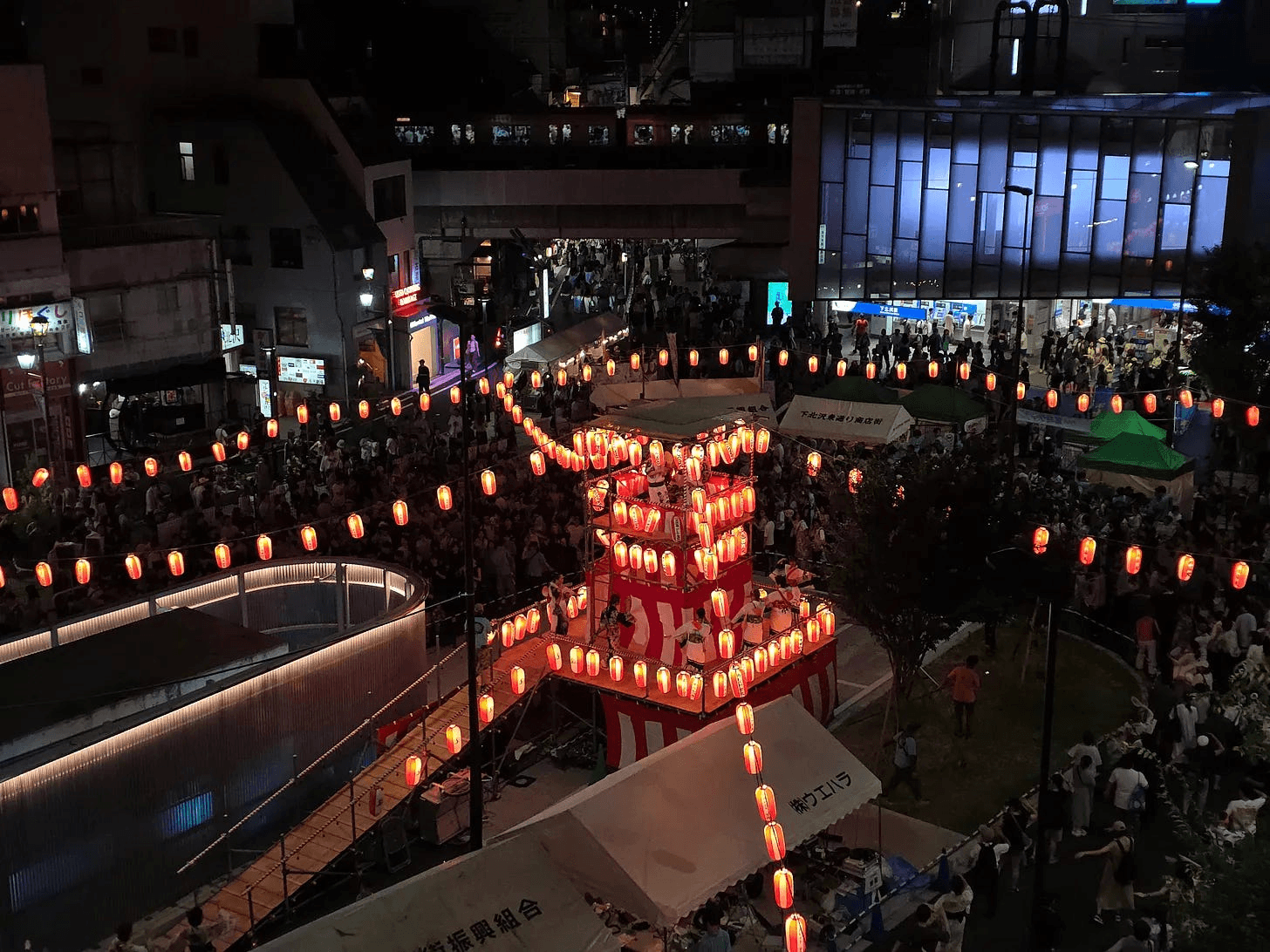
The four seasons are distinct. At the ski resort, I could feel snow gradually piling up after winter arrived. When spring came, I could slowly see the ground appear after the snow melted, with a few green shoots emerging. Two weeks later, everything was lush green. Now that summer has arrived, I am drenched in sweat just walking home from the station, but there are many fireworks festivals and Obon dance events. In autumn, there will be maple leaves to see.
JPop also means I have achieved ticket-lottery freedom. When artists announce shows, I just register online, and usually I can win. Even if I do not, there are other shows to enter. Japan has many long weekends, and almost every long weekend has a corresponding music festival: Count Down Japan for New Year, Japan JAM during Golden Week in May, Summer Sonic during Obon in August, Rock In Japan during Silver Week in September, and so on.
Every season's new anime can be seen advertised on the streets. I do not worry about being unable to buy merchandise I want. If I see an exhibition, I can just go. Once I saw a street ad for the Look Back exhibition and went straight to Azabudai to see it.
These are all things I once longed for. They really exist, and they are within reach.
But besides these things, Japan has also brought many new problems. I have started weighing the new problems Japan gives me against the problems I had in Taiwan. Which problems do I want to coexist with?
Coming Here and Staying Here
Coming to Japan has already completed one item on my life list. I can answer to the version of myself from five years ago. Staying here is another question.
When the pandemic restrictions had just lifted, I once flew to Japan and worked remotely for a month and a half. The company suddenly shutting down during that period is another story.
At the time, I wanted to actually experience life here and talk with friends who were staying here. Over the years, I had also kept adjusting my expectations of Japan. But no amount of research or mental preparation beforehand compares with actually holding a visa and working here for a month.
It is like what my friends who invest often say: "It does not count until you put money in." After you really put money in, every move affects your chips, and that sense of being in the game only appears in the moment. That is when you truly become part of the game.
After working in Japan as a software engineer for a month, that sense of immediacy and the shape of life afterward suddenly emerged from the fog. Both joy and pain were branded onto my body.
The Challenge of My Current Job
The company I work at now is a fake foreign company and real Japanese company. It is also the first stop for many people who come to Japan, often jokingly called a stepping stone. Based on all that, some people can probably guess where I work.
The Japanese and foreigner departments are fairly separate, but because I can speak Japanese, I joined a Japanese department. My current takeaway is that I should have insisted on joining an English-speaking department.
I originally thought the biggest challenge would be Japanese or technical ability. It turned out to be the physical working hours. There is a lot of shift work. Often, in the middle of the night, for example 1-6 AM or 4-6 AM, we need to do load tests or system releases. It happens about one to three days a month, and it makes my daily rhythm and after-work plans very difficult.
I also have almost zero interaction with my Japanese coworkers. Since joining, outside of meetings, I have barely spoken a few sentences with them. Only on the first day did we eat together.
Even though in Taiwan I used to laugh and say, "Good coworkers at work, strangers after work," many of my good friends now are former coworkers, and many opportunities came from former coworkers introducing them to me.
Here, there is an invisible wall between me and my coworkers. Even starting a conversation is difficult. Work feels quite oppressive. Outside meetings, I basically do not speak at all.
I am grateful to a Twitter friend who introduced me to other Taiwanese people in the company, so I can speak Chinese at lunch and catch my breath, and also have friends to complain with.
Maybe there has never been such a thing as a normal job or the way things should be. Constantly imagining what a company should look like and comparing it with reality may be where the pain begins.
It has been about two months since I joined at the end of May. Aside from shift work, I have slowly gotten used to things. I can barely communicate in Japanese. For programming, I mostly ask AI to do the work and mainly check the logic myself. My workday is once again cut into small pieces by all kinds of meetings. Compared with code, there are more documents to write, and I have to obtain approvals layer by layer. Many meetings exist only because, during a system release or document check, one person needs to fill in data or operate something while another person serves as a buddy and confirms beside them. If the service has had an incident recently, one more process gets added.
I think engineers here really will not be replaced by AI, because too many things require a person to be there and take responsibility.
The Challenge of Japanese
Having the language of daily life become a foreign language in every direction is actually quite stressful. I did not feel it as strongly during working holiday.
When I entered Japan again with a work visa and felt as if I had "graduated from Taiwan," I realized that life from here on would be like this. A wave of panic suddenly hit me. I have confidence in writing, reading, and expressing my thoughts, but only in Chinese. After switching to another language, that confidence was taken away. I suddenly became a foreigner who is not good at expressing himself.
I am not sure whether this will improve as my language ability improves. Based on my experience learning English, maybe it will. My Japanese has indeed been growing. This month, I revisited an old place and went to Zepp Haneda for a Suzuki Airi concert after two years. I was surprised to realize that I could understand what Airi was saying. Two years ago, I also could not have imagined that my first job in Japan would require me to use Japanese.
At the same time, I see friends who majored in Japanese and friends who have stayed here for many years still struggling with Japanese. I have gradually come to feel that this road has no end. How much am I willing to give to Japanese in order to stay in Japan?
After coming here, one wall after another appeared in front of me. How many more walls do I still need to cross? What lies ahead?
Being a Foreigner in Japan
Attitudes toward immigration probably come in waves, but right now both Australia and Japan are on the anti-immigration side. Compared with Australia, Japan is even less used to immigrants. About one third of Australia's residents are foreign-born, while in Japan the figure is only 3%.
For foreigners, the country decides everything. We carry the same heavy tax burden, cannot freely change jobs, and if a visa is mishandled, canceled, or expires, we have to pack up and go home.
Since last December, which is when I came to Japan, Japan has started adjusting policies for foreign workers, including updated visa fees and higher thresholds for permanent residency. Software engineers are relatively less affected, because we are still considered highly skilled workers and are a group Japan currently wants to keep.
But looking back at Taiwan, Taiwan's labor conditions and procedures for foreigners are also harsh. It is just that I am a citizen in Taiwan, so I never really thought about the situation of foreigners there.
All I can say is that being a foreigner in another place means getting used to how that place treats foreigners. If you cannot accept it, you leave. If it is more comfortable than going home, you stay.
On this topic, I want to recommend 觀光以上,公民未滿。.
Things Japan Did Not Change
The pressure and burnout of being a software engineer, the tug-of-war between career and creation, and loneliness.
Burnout in My Software Career
I probably started feeling burned out with my software career after changing to my second job. That is why I have written very few technical articles. I have held onto being a software engineer because it is a job that gives me a chance to go abroad without going back to school, and it is currently the best way I know to earn a good income.
Possibilities do not shrink just because you work seriously in the software industry. I am actually quite sure that what I most want to do is not write software. But in terms of "work," my best choice right now is writing software. If I have energy left, I can cultivate the fields I am interested in and try to balance dreams and reality. What I most want to do is probably create or share, maybe as a writer, blogger, or lecturer, but none of those can support my life yet. So I will take care of my main job while finding time to enrich myself. -- Looking Back on My First Three Years as a Software Engineer
Only after truly accepting the possibility that I might not continue programming did I begin to see more possibilities. In the past, my imagination of making a living was restricted by the identity of software engineer. The options I could think of were all about what programming skills to sharpen, joining a foreign company, freelancing, building my own SaaS product, and so on. But after actually going to a factory to cut pumpkins for money, I was shocked to realize that I had been seeing the sky through a tube, looking out only through the straw called software development. I could only see that one part of ways to make a living. Now that I have taken away that straw, I realize the countless possibilities in front of me have no visible end. -- In Australia, But My Heart Is in Japan: Graduating From Four Months of Working Holiday in Australia
In less than a year of working holiday, I learned there are other choices. But the premise has not changed: software engineer is still the best option I know. I took this identity back, successfully came to Japan to work, and then after only two months I already felt exhausted in both body and mind.
The current company may also be part of the reason, because I am quite happy when contributing to open source with g0v jothon, and I am also happy building up my personal website.
Now that I have come to Japan, I have achieved a milestone goal as a software engineer. How long should I keep this identity from here? Is the next goal permanent residency?
In more than five years of a software career, I feel like an ape trying to learn how to swim. I can swim, but my body is heavy and I swim clumsily.
Of course, work is largely about making a living, so even if I am burned out, I still have to keep doing it. Earlier, I made it sound as if I could simply decide not to be a software engineer anymore. But if working holidays in Australia and Japan taught me anything, it is that living on basic hourly pay is also possible, and the key to living well is not money. I will talk about the next step and money in "Part 2."
Loneliness
After coming to Japan, I have felt a stronger loneliness than before.
I felt it in Taiwan too. I have always been someone who is afraid of loneliness.
But when I was in Taiwan, I later used "I have to work hard so I can go to Japan" to press that loneliness down. After the goal was achieved, the loneliness I had suppressed for so long came pouring out.
Only after coming to Japan did I realize how afraid of loneliness I am.
To some extent, the thing I feared most still happened. My roots in Taiwan were too deep. The two writing groups and one open-source community I had in Taiwan all became remote online participation after I came to Japan, and it feels quite lonely.
But if I had not come out, the goal of wanting to come to Japan would have kept stopping me from facing the loneliness I felt inside.
I think I have only now truly stepped onto the road of looking for home.
I am in Australia now and will go to Japan next year. I hope I can encounter a place that gives me the feeling of home, or find people with whom I can create a sense of belonging, like Cikapasi, the Ainu orphan in Golden Kamuy, who traveled with Tanigaki and Inkarmat and later stayed in Karafuto after meeting people willing to accept him. -- Written After Becoming Homeless
Closing
Thank you to everyone who read this far. Although I am giving a warning that there may not necessarily be a "Part 2," I will still try to write it. This article is mostly about "now." The next one will write about some things "afterward."
In the share house, I often see people on video calls. In Taiwan, I hated talking on the phone. I never expected that now I would be video calling friends almost every day. Thank you to everyone who has chatted with me during this period.
Thank you to Yuuya, U-ken, Nayu, Joyce, Zihan, V, Lydia, Xian-ge, Josh (from the UK), Teacher Josiah Luo, Diamond, Ningyu, Kaiyuan, Weiyin, Elaine Lee, Guanzhi, Fangkuai, Buding, Andie, Yuanhao, Daiying, Yihui, Shihan, Eric (Pumpkin), Charlie Cat, Jason & Eric.
Thank you to everyone else who supported and encouraged me through messages.
Thank you to Kalan, Huli, Leafwind, and Sam Kuo for the articles you have shared. I have kept going back to read what you wrote during this period, looking at the thoughts of people ahead of me who live in Japan.
Thank you to min, YA-Xuan, and Hyuanverse for reading my draft and giving feedback.
Without all of you, I do not know what I would become.
support
Give me a Boba!
Thank you for arriving at my web 🕸️ in a time when attention is precious. If this visit felt worthwhile, buying me a boba would mean a lot!